
Built-In Grill Installation in Santee, CA
Getting the grill right is where an outdoor kitchen either works well for years — or causes problems down the road.
Why Proper Built-In Grill Installation Matters
A built-in grill is a permanent fixture, which means installation mistakes are far more costly to fix than they would be with a freestanding unit. Getting the cutout size, gas line, and ventilation right from the start avoids problems that are difficult and expensive to correct later.
Common reasons proper installation matters include:
- Safety — Correct gas line sizing and clearances reduce the risk of leaks or heat damage to surrounding materials.
- Performance — A grill installed with the right ventilation and airflow performs more consistently than one boxed in too tightly.
- Longevity — Proper installation reduces wear on components caused by heat buildup or inadequate clearance.
- Future compatibility — A cutout sized to standard dimensions makes it easier to replace the grill down the road without rebuilding the surrounding structure.
- Code-conscious planning — Gas and electrical work is planned with manufacturer specifications and standard safety practices in mind.
There’s no universal “best” grill setup — the right fuel type, size, and features depend on the homeowner’s cooking habits, budget, and how the surrounding structure is built.
Natural Gas vs. Propane Built-In Grills
One of the first decisions homeowners face with a built-in grill is fuel type, since it affects both installation requirements and day-to-day use.
| Factor | Natural Gas | Propane |
|---|---|---|
| Fuel supply | Connected directly to the home’s gas line | Requires a tank that needs periodic refilling or exchange |
| Installation | Requires a dedicated gas line run to the grill location | Requires tank storage space within or near the island |
| Convenience | No need to monitor or replace fuel supply | Needs tank monitoring and occasional replacement |
| Installation cost | Generally higher due to gas line trenching and connection | Generally lower upfront installation cost |
| Portability | Fixed to the gas line location | Tank can be swapped, though the grill itself remains built-in |
Neither fuel type is automatically the better choice — natural gas suits homeowners who want uninterrupted fuel supply and don’t mind a higher upfront installation cost, while propane offers a simpler installation for homeowners who don’t mind managing tank exchanges.
Our Built-In Grill Installation Services
Built-in grill installation involves several coordinated steps, and we handle each one as part of the overall project. Services typically include:
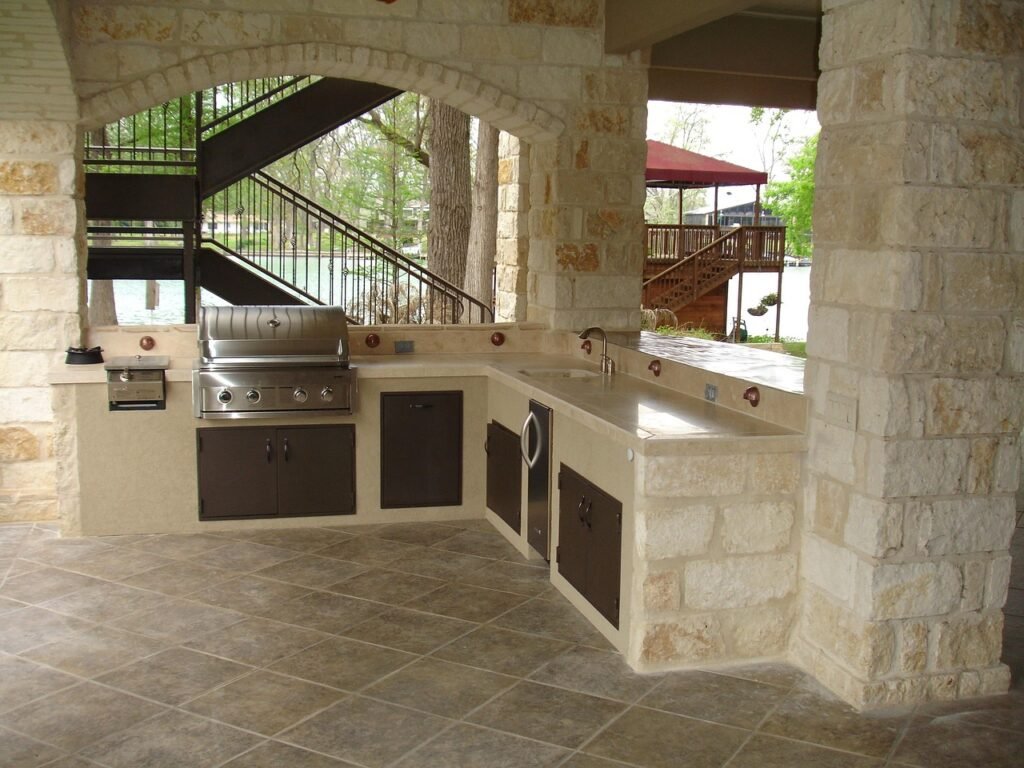
Gas Line Installation for Built-In Grills
Running and connecting the appropriate gas line — whether natural gas or propane — sized correctly for the grill’s BTU output and distance from the source.
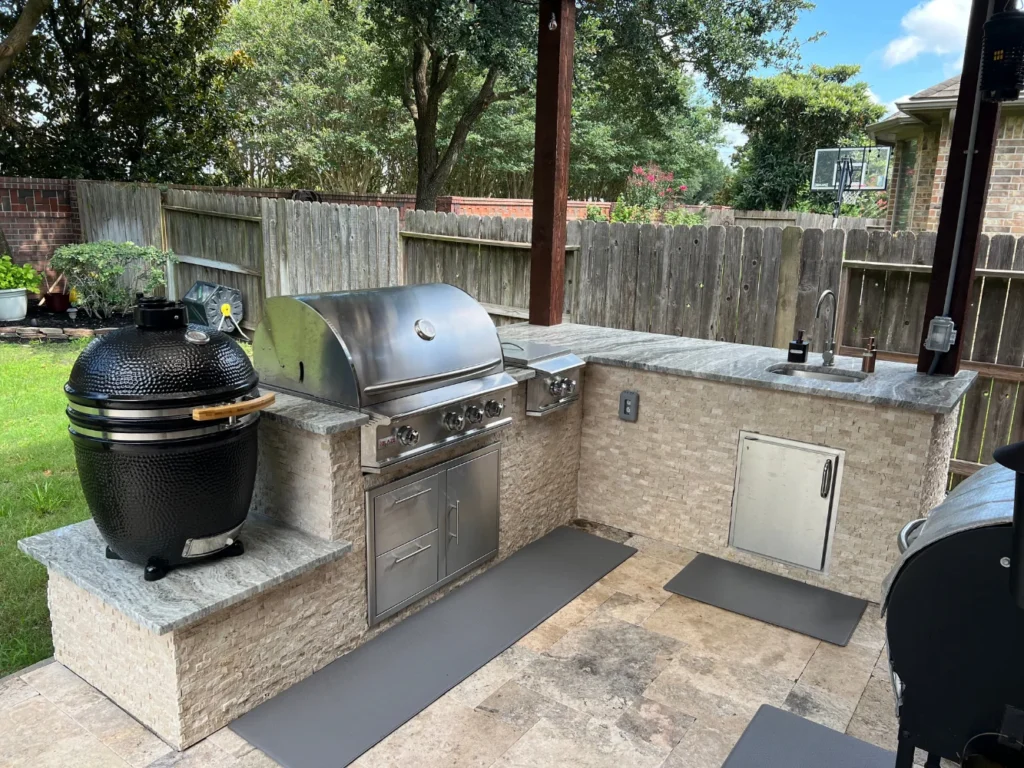
Grill Cutout & Frame Preparation
Building the structural opening to match the grill’s exact dimensions, with the necessary clearance and support for the unit’s weight.
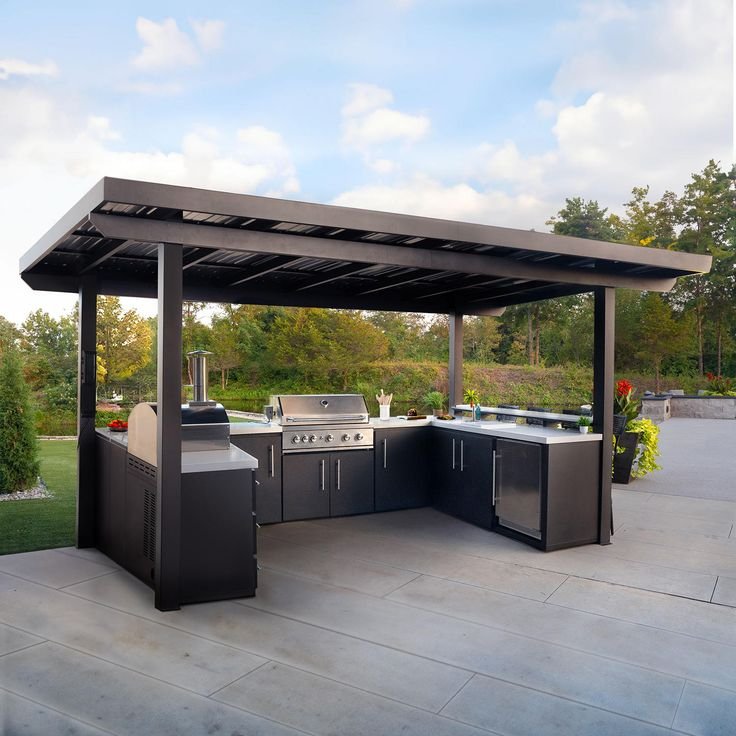
Ventilation & Clearance Installation
Incorporating proper airflow and heat dissipation around the grill housing to prevent heat buildup inside the surrounding structure.
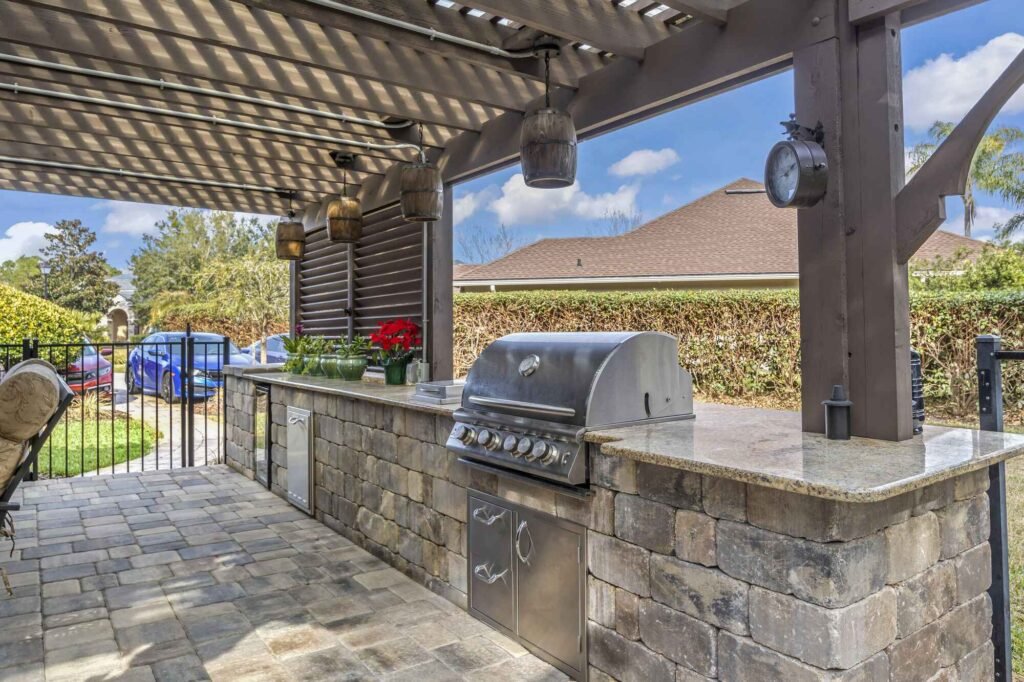
Electrical Hookup for Grill Accessories
Wiring for grill-adjacent features like rotisserie motors, interior lighting, or ignition systems that require an electrical connection.
Grill Island Countertop Fitting Around Grill
Fitting the countertop precisely around the grill’s cutout and trim kit for a clean, finished appearance.
Grill Replacement & Cutout Resizing
Removing an existing built-in grill and either fitting a same-size replacement or resizing the cutout and surrounding structure for a different unit.
What Santee Homeowners Should Know About Built-In Grills
Santee has a warm Mediterranean climate, with extended sun exposure through most of the year. The city receives approximately 12.7 inches (323 mm) of rainfall annually, with most of that falling between November and March. Because built-in grills are frequently used and exposed to the elements, stainless steel components, weather-resistant hardware, and proper ventilation all play a role in how well the grill performs and holds up over time.
Since grills in Santee tend to see regular use across most of the year rather than sitting idle for long stretches, proper installation matters more here than in climates with a shorter outdoor cooking season. A grill installed with correct gas line sizing and clearance is better equipped to handle frequent use without developing heat-related wear on surrounding materials.
Wind patterns are also worth considering when placing a built-in grill. Positioning the grill with prevailing wind direction in mind helps keep smoke away from seating and entertaining areas, which is a common consideration during the design and installation planning process.
Built-In Grill Installation Cost in Santee
Grill installation costs depend on the grill unit itself, fuel type, and the scope of gas or electrical work required. The table below reflects general cost ranges commonly seen for built-in grill installation, intended as a starting reference point for planning purposes.
| Item | Typical Cost Range |
|---|---|
| Built-in grill unit (entry to mid-range, 30–36 in) | $1,500 – $4,000 |
| Built-in grill unit (high-end, 36–42 in) | $4,000 – $9,000+ |
| Gas line installation (new run to grill location) | $500 – $1,800 |
| Propane tank setup with enclosure | $200 – $600 |
| Electrical hookup (rotisserie, lighting, ignition) | $250 – $700 |
| Grill replacement into existing cutout (same size) | $800 – $2,000 |
| Cutout resizing for a different grill model | $1,500 – $4,000 |
Factors that influence built-in grill installation cost include:
- Grill size and brand tier
- Fuel type and distance from the gas source
- Whether new gas or electrical lines need to be run
- Whether the project is a new install or a replacement
- Additional accessories like rotisseries or side burners
- Countertop fitting and trim kit requirements
These ranges are general estimates. Actual project costs depend on the specific grill model and scope of utility work, and we’re happy to provide a more detailed estimate based on your setup.
Grill Types & Considerations
Beyond fuel type, several other factors affect how a built-in grill is installed and how it performs over time.
Infrared burners provide high, consistent heat suited to searing, though they typically require specific clearance considerations due to their heat output.
Standard burners offer more even, adjustable heat across the cooking surface for general grilling needs.
Rotisserie attachments require an additional electrical connection and rear burner, which needs to be planned during installation rather than added later.
Side burners are often installed alongside the main grill and need their own gas connection sized appropriately.
Stainless steel grill housings are the most common choice for built-in units due to their resistance to rust and weather exposure.
Insulated jacket kits are sometimes required by manufacturers when a grill is installed close to combustible materials, adding a layer of heat protection around the unit.
Why Choose Us for Built-In Grill Installation
Grill installation combines gas work, structural framing, and finish work, and it’s a service that requires attention to the manufacturer’s specific requirements for each unit.
- Installation-focused expertise — We handle grill installation as a distinct, detail-driven part of every outdoor kitchen project.
- Proper gas line planning — Lines are sized according to the grill’s BTU output and distance from the fuel source.
- Clearance and ventilation awareness — We follow manufacturer specifications for clearance and airflow rather than treating every cutout the same.
- Comfortable with replacements — Swapping an aging grill for a new one, including resizing a cutout if needed, is a service we regularly handle.
- Local familiarity — We understand how Santee’s climate affects grill materials and long-term performance.
- Clear communication — Homeowners are informed about fuel type tradeoffs, clearance needs, and installation steps before work begins.
Get Started With Outdoor Kitchen Installation in Santee
Let’s chat about your ideas! Getting started is easy – simply reach out with details about your Outdoor Kitchen project!
Need Help?
Frequently Asked Questions About Built-In Grill Installation in Santee
Below are some of the most common questions Our Network get from families about Outdoor Kitchen. If you have any other questions contact us!
What size gas line is needed for a built-in grill?
Most built-in grills use a 3/8-inch or 1/2-inch gas line, sized based on the grill’s BTU output and the distance from the gas source — higher BTU grills or longer line runs often require a larger diameter line to maintain adequate pressure.
How many BTUs does a typical built-in grill produce?
Built-in grills commonly range from around 30,000 to 60,000+ BTUs for the main burners, with larger, higher-end units sometimes exceeding 80,000 BTUs when side burners and additional features are included.
What clearance is required around a built-in grill?
Manufacturer requirements vary by model, but many built-in grills require a few inches of clearance from combustible materials on the sides and back, with some models requiring an insulated jacket kit if that clearance can’t be met.
Can I switch from propane to natural gas after installation?
Many grills can be converted between fuel types using a manufacturer-specific conversion kit, though this involves swapping certain internal components and should be done by someone familiar with the specific unit.
How much propane does a built-in grill use?
A standard 20-lb propane tank typically provides somewhere in the range of 18–20 hours of cooking time at moderate heat for an average-sized grill, though usage varies based on burner output and how often high heat is used.
Is a permit required for gas line installation?
Requirements vary by project and local jurisdiction, so this is worth confirming with the appropriate local authority based on the specific scope of work involved.
Price the grill, the cut-out and the gas run
A same-size swap and a cut-out resize are the same appliance and very different jobs. This calculator asks about the opening first, then the gas and the electrical.
Every calculator gives a planning range with a full cost breakdown — it is not a contractor quote.
Talk to an Outdoor Kitchen Contractor in Santee
Whether you’re in Carlton Hills, Riverwalk, Sky Ranch, Fanita Ranch, Weston, Mission Creek, or Riverview, a properly installed built-in grill is the foundation of a functional outdoor kitchen. We also work with homeowners throughout El Cajon, La Mesa, Lakeside, Spring Valley, Lemon Grove, Rancho San Diego, and San Carlos.